A cluttered coffee table is the fastest way to make a living room feel chaotic, no matter how perfectly the rest of the space is decorated. Minimalist coffee table decor offers the antidote: a thoughtful approach that keeps surfaces calm while serving the table’s actual purpose. This isn’t about having nothing on your table, it’s about choosing only items that earn their place through function, beauty, or both. For homeowners and DIY enthusiasts looking to carve out a more intentional living space, a well-styled minimalist coffee table becomes both a visual anchor and a practical hub. Let’s walk through how to achieve that balance.
Table of Contents
ToggleKey Takeaways
- Minimalist coffee table decor removes visual clutter by keeping only items that serve a functional or aesthetic purpose, making your living room feel larger and calmer.
- A well-styled minimalist coffee table should maintain 60–70% empty space, with items arranged using odd numbers and varying heights to create visual interest without chaos.
- Essential minimalist coffee table decor includes a tray for organization, quality coasters, one plant or sculptural piece, and perhaps an art book—each item should earn its place.
- Different minimalist aesthetics exist, from Scandinavian warmth to industrial drama to modern gallery-style, so choose a style that reflects your home’s overall design.
- Regular maintenance of minimalist coffee tables is simplified by using quality coasters, wiping down dust promptly, and rotating seasonal items to keep the space fresh.
- Establish a rule that something old must leave before something new arrives on your table, preventing the slow creep of clutter that undermines your minimalist design.
Why Minimalist Coffee Table Decor Works for Modern Homes
The Philosophy Behind Less-Is-More Styling
Minimalism isn’t about deprivation, it’s about intention. When you remove visual noise, the remaining items naturally stand out, and your eye can rest instead of jumping between competing focal points. A coffee table in a minimalist home becomes a breathing space, which makes the entire room feel larger and calmer.
This approach also solves a real problem: decision fatigue. With fewer items to choose from each morning, you’re less likely to pile magazines, remotes, and coffee cups into a tower of clutter. The table invites you to use it thoughtfully rather than dump things on it by default.
For modern homes especially, minimalist coffee table styling aligns with contemporary design trends that emphasize clean lines, open space, and purposeful arrangement. It’s not sterile, it’s intentional. Each object has presence because nothing fights for attention. The furniture itself, whether a live-edge wood slab or a sleek metal frame, becomes the visual star instead of being buried under decor.
Essential Elements of a Minimalist Coffee Table
Choosing Functional Decor Items That Earn Their Space
Every item on a minimalist coffee table should answer this question: Does it function or does it truly enhance the space? If the answer is no, it doesn’t belong.
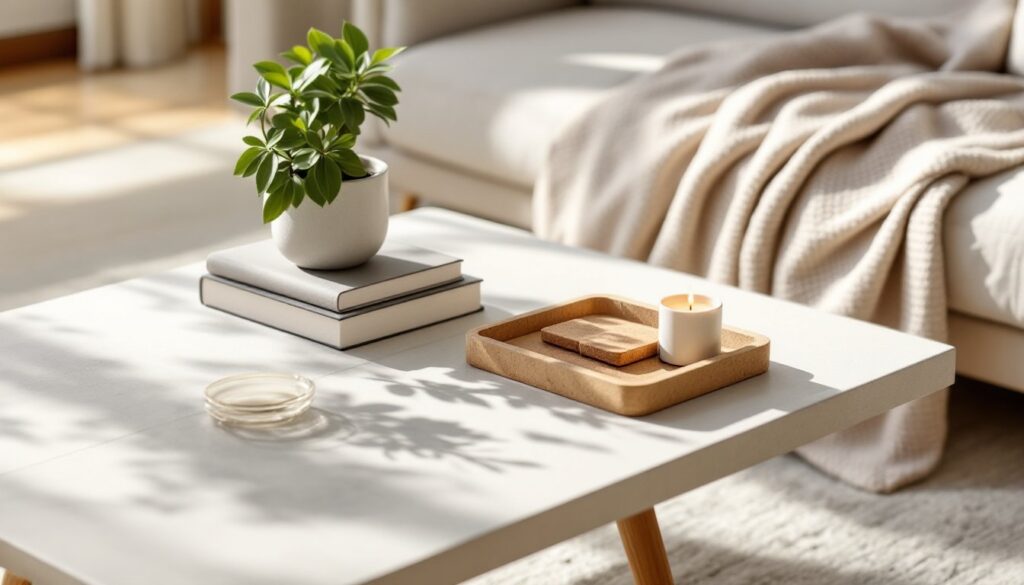
Functional essentials include a tray (to corral small items and create visual boundaries), coasters (protecting your surface and looking intentional), and perhaps a vessel like a small wooden box or ceramic bowl. These aren’t extras, they’re things you’ll actually use. A well-chosen tray, whether simple woven rattan or clean-lined concrete, serves as an organizer and visual anchor.
Decor that earns its place typically falls into one of three categories. First, there’s an art book or two, the kind you’ll actually flip through, stacked neatly or displayed with a heavy bookend. Second, a single plant or sculptural object that commands attention through form or texture without requiring constant styling. Think a small potted monstera or a hand-thrown ceramic vessel. Third, a functional personal item like a candle you light regularly or a small object with sentimental meaning.
Avoid duplicate items and decorative-only pieces. That stack of five coasters, three remotes hidden under magazines, or a collection of tchotchkes works against minimalism. Stick to one remote holder, one candle (not five), and one plant rather than a jungle. Recent modern design inspiration shows that restraint actually creates more visual impact than abundance.
How to Arrange Items for Visual Balance and Breathing Room
The arrangement of your minimalist coffee table matters as much as what’s on it. Start by establishing a visual anchor, usually something at the center or slightly off-center that draws the eye. A plant, book stack, or sculptural object works well here.
From there, build outward with negative space in mind. Leave at least 60 to 70 percent of your table surface empty. This isn’t laziness: it’s intentional design. That empty space is part of the composition and allows the remaining items to breathe.
If you’re using a tray, use it as a contained zone for smaller items like coasters, a pen, or a small candle. This prevents those items from scattering and keeps the overall look organized. Arrange objects in odd numbers when possible (one plant, or three stacked books rather than two or four), this creates visual interest without chaos.
Consider height variation too. A tall book stack paired with a low, spreading plant creates depth and prevents everything from feeling flat. If your table has a wood surface, bare wood becomes part of your design, not something to hide. Let it show, that’s part of minimalist styling.
Styling Ideas for Different Minimalist Aesthetics
Minimalism comes in different flavors, so your coffee table should reflect the version that fits your home.
Scandinavian minimalism pairs light wood surfaces with white pottery, soft textures, and maybe a hygge-focused element like a lit candle or chunky knit throw draped nearby. One neutral art book and a small green plant complete the look. The warmth comes from natural materials rather than color.
Industrial minimalism uses concrete, metal, and dark woods. A concrete tray, black or gunmetal coasters, stacked art books with matte covers, and perhaps a trailing pothos in a steel pot create quiet visual drama. Everything is functional-looking but carefully chosen.
Japandi (Japanese-Scandinavian) minimalism emphasizes asymmetry, natural materials, and tranquility. Off-center placement of a ceramic vessel, a single bonsai or low plant, and perhaps one art book create balance without symmetry. Wood tones dominate, and every object has clean lines.
Modern minimalism goes lighter, white surfaces, clear glass, chrome accents. A white ceramic tray, a sculptural white candle, one potted succulent, and perhaps a single design-focused art book create an almost gallery-like effect.
The key across all aesthetics is consistency. Your table should reflect the overall style of your home, not fight against it. Sustainable home design trends now emphasize pieces that last and feel timeless rather than trendy, so contemporary interior design that leans minimal tends to age better than over-decorated approaches.
Maintaining Your Minimalist Coffee Table Long-Term
A minimalist table is easier to maintain than a cluttered one, but it still requires intention. Since everything is visible, dust, water rings, and fingerprints show more easily. Invest in quality coasters (cork-backed wood or felt work well) and use them every single time, this becomes habit quickly. Keep a soft cloth nearby for quick wipe-downs.
Rotate your decorative items seasonally or quarterly. Maybe a plant comes on and off as it grows or needs repotting, or your art book selection changes with your mood. This keeps the space feeling fresh without adding permanent clutter.
Set a rule: before something new lands on that table, something old has to leave. This prevents the slow creep of clutter that undoes all your minimalist work. Your coffee table should support your actual lifestyle, if you need a pile of remotes, find a hidden holder. If you read magazines, keep a single rack beside the table rather than stacking them on top.
For families with kids or pets, minimalism might mean keeping the table mostly clear during high-activity hours and styling it fully during quieter times. This is honest home management, not failure. Affordable decorating ideas that work long-term acknowledge real-life constraints and adjust accordingly. Your minimalist table should work for you, not against your daily life.