Longhorn wall decor has moved well beyond the stereotypical rodeo-themed basement. Today’s longhorn wall art, whether mounted above a fireplace, flanking an entryway, or anchoring an accent wall, brings authentic Western heritage and architectural interest to spaces from farmhouse kitchens to modern living rooms. The appeal is straightforward: these pieces command visual weight, spark conversation, and work with surprisingly diverse design palettes. Whether you’re drawn to natural bone, bleached finishes, or faux alternatives, longhorn wall decor offers homeowners a tangible way to infuse character and personality into their homes. This guide covers style options, placement strategies, and practical installation tips so you can add this statement piece confidently.
Table of Contents
ToggleKey Takeaways
- Longhorn wall decor adds authentic three-dimensional depth and architectural interest to modern homes while remaining neutral enough to complement diverse design styles from farmhouse to minimalist interiors.
- Natural bone longhorns range from $400–$1,500+, bleached options cost $300–$1,200, and high-quality resin alternatives offer budget-friendly choices at $80–$400 for those testing the aesthetic before committing.
- Mount longhorn wall decor above fireplaces, entryways, or accent walls at eye level with at least 24–36 inches of clearance, always securing into wall studs or using heavy-duty anchors rated for 20–50 pound pieces.
- Pair longhorn wall art with restrained color palettes of soft whites, creams, and earth tones, plus textural elements like wood, leather, and woven materials to create visual richness and intentional design.
- Unlike trendy décor, longhorn wall art has sustained relevance as a design staple with strong cultural ties to American ranching heritage, making it a lasting investment that shows no signs of fading through 2026 and beyond.
Why Longhorn Wall Decor Works for Modern Homes
Longhorn wall decor succeeds because it bridges high and low design in ways few pieces can. A genuine or well-crafted faux longhorn conveys heritage and authenticity, it’s not a mass-produced print, yet it translates cleanly into contemporary, minimalist, and eclectic interiors. The sculptural form adds three-dimensional depth and movement that flat wall art simply can’t match. In an age of digital overstimulation, tactile, architectural decor appeals to homeowners seeking grounded, intentional spaces.
The color palette is naturally neutral. Real bone ranges from cream to warm tan: bleached finishes offer near-white tones: resin and faux options replicate these easily. This restraint means longhorn pieces complement rather than compete with existing décor, color schemes, or artwork. They work equally well in a monochromatic room or as a focal point in a richly layered space. Also, longhorn decor carries cultural weight, it ties to American ranching heritage, craftsmanship, and a direct relationship with land and animal husbandry that feels authentic in a world of throwaway décor. Homeowners aren’t just buying an object: they’re investing in a story.
Finally, unlike trendy pieces that peak and fade, longhorn wall art has staying power. It’s been a design staple for decades and shows no sign of losing relevance, especially as rustic Western and modern farmhouse aesthetics continue to trend through 2026 and beyond.
Popular Longhorn Decor Styles and Finishes
Understanding the material options helps you choose a piece that fits both your aesthetic and your budget, maintenance comfort, and home environment.
Natural and Bleached Bone Options
Authentic Texas longhorn skulls, the real thing, are the gold standard for purists. These pieces arrive with varying degrees of patina and weathering, making each truly one-of-a-kind. Natural bone carries warm ivory and tan tones with textural details that catch light beautifully. Expect to invest $400 to $1,500+ depending on horn spread, condition, and provenance. Real horn requires minimal maintenance: occasional dusting and, if displayed in direct sunlight, a UV-blocking spray to prevent yellowing over time.
Bleached bone is the cleaned, whitened version of authentic skull. Bleaching removes organic material and bacteria, lightens the tone to near-white, and creates a more uniform, gallery-like appearance. Bleached pieces run $300 to $1,200 and suit contemporary, Scandinavian, or high-contrast interiors beautifully. Both natural and bleached authentic options are sourced from surplus livestock from ranches or auctions, no animals are harmed specifically for decor.
Resin and Faux Alternatives
High-quality resin castings replicate authentic bone shape and finish convincingly. These pieces run $80 to $400, making them accessible for renters, those on tighter budgets, or homeowners testing the look before committing to authentic skull. Resin won’t yellow or crack and requires just dusting. But, some lower-grade faux pieces look plasticky and won’t fool anyone: investment in mid-to-high-end resin pays off visually. Polyresin and composite materials are durable and often lighter weight than real bone, simplifying wall mounting.
Where to Display Longhorn Wall Art in Your Home
Placement matters. Longhorn pieces perform best where they become intentional focal points, not afterthoughts tucked in corners.
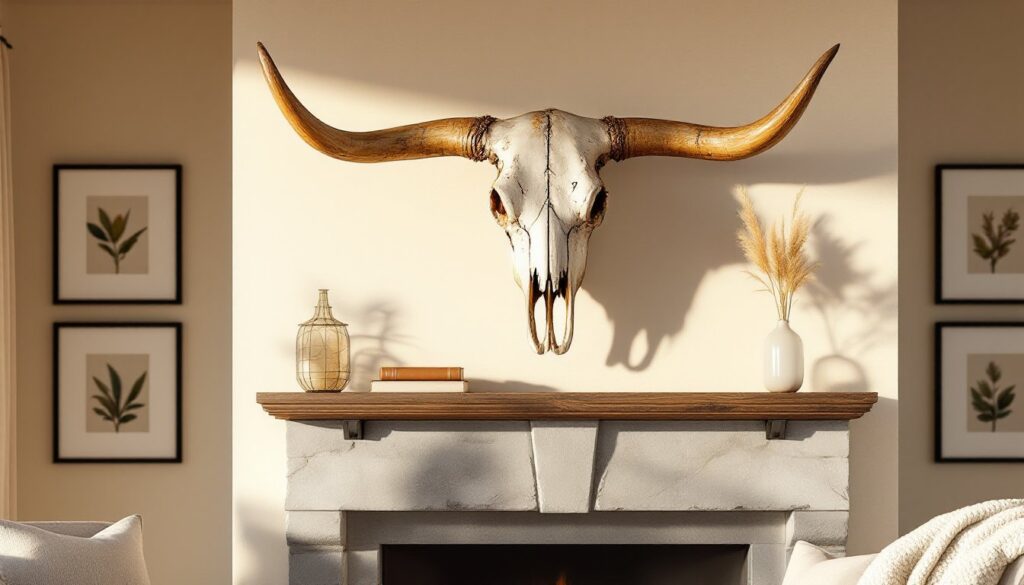
Above fireplaces and mantels is the most common and effective placement. The piece aligns with the eye line when standing, commands the room visually, and relates naturally to gathering spaces and hearth culture. The mantel provides grounding: the wall above gives the horns breathing room. Ensure at least 24 to 36 inches of clearance above the mantel to avoid a cramped feel.
Entryways and foyers make bold first impressions. A longhorn over a console table or directly on a bare wall says “welcome” with confidence. This works especially well if your entry is relatively spacious: a narrow hallway can feel crowded.
Bedrooms and master suites pair well with Western or ranch-inspired aesthetics. Mount the piece above a bed’s headboard or on an accent wall. Ensure the room’s scale matches, a large longhorn in a small guest bedroom can overwhelm.
Living rooms and den spaces allow flexibility. A longhorn can anchor a gallery wall, float on its own, or anchor an accent wall alongside complementary pieces. Avoid direct sunlight, which fades natural bone over time. If your space gets bright afternoon light, consider mounting on a wall that receives indirect light or using UV-blocking window film.
Steer clear of kitchens or bathrooms where moisture and temperature fluctuations stress bone and faux materials alike. Similarly, avoid entryways with direct entryway traffic where guests might bump the piece or where kids’ rough play risks damage.
DIY Tips for Mounting and Arranging Longhorn Decor
Installation is straightforward if you follow prep work. Authentic bone is heavier than it looks: a large piece can weigh 20 to 50 pounds. Always mount into wall studs or use heavy-duty anchors rated for that weight.
Tools and materials you’ll need:
- Stud finder (especially important for drywall walls)
- Level (2- to 4-foot)
- Measuring tape
- Drill with bits (for pilot holes)
- Heavy-duty lag bolts or wood screws (3-inch minimum)
- Washers (to distribute load)
- Drywall anchors (if studs aren’t available: verify weight rating)
- Pencil and paper for marking
Step-by-step:
-
Locate studs with a reliable stud finder. Mark stud centers on the wall with a pencil. Studs are typically spaced 16 inches on center in most residential framing.
-
Measure and mark. Hold the piece against the wall (or have a helper hold it) at your desired height. Use a level to ensure horns are horizontal. Mark mounting holes lightly with pencil.
-
Drill pilot holes. Use a drill bit slightly smaller than your fastener diameter to create shallow pilot holes. This prevents drywall cracking and guides the bolt straight.
-
Mount securely. Insert lag bolts or wood screws directly into studs, or use rated drywall anchors if studs aren’t positioned where you need them. Tighten gradually and evenly, over-tightening can crack bone or strip holes.
-
Double-check level. Step back, confirm the piece is level, and verify it’s secure by gently testing (don’t hang from it). Use shims under mounting brackets if needed for fine adjustments.
For apartment renters or those reluctant to drill, adhesive mounting strips rated for 30+ pounds work for lighter faux pieces on smooth drywall, but real bone is too heavy and risky for adhesive alone. Consult your lease about wall modifications: many landlords prohibit permanent holes.
Pairing Longhorn Decor With Complementary Design Elements
Longhorn wall art doesn’t live in isolation. The surrounding decor determines whether the piece feels cohesive or orphaned.
Color and neutrals. Longhorn works best when paired with a restrained palette. Soft whites, warm creams, grays, and earth tones (terracotta, ochre, warm brown) complement natural and bleached bone without competing. If you love color, let the longhorn anchor a neutral wall while other elements, pillows, artwork, textiles, introduce hue elsewhere.
Textural layering. Pair bone with rough wood beams, leather furniture, woven rugs, or linen upholstery. These materials echo the organic, tactile quality of real horn and create visual richness. A longhorn above a stone fireplace surround or rustic wood mantel feels inevitable: the same piece floating on a glossy painted wall needs additional grounding.
Complementary wall art. If you’re building a gallery wall, let the longhorn be the anchor, the largest, most commanding piece. Flank it with framed botanical prints, Western landscape photography, or black-and-white portraits in simple frames. Resources like The Spruce Crafts offer creative gallery wall layouts. Avoid competing statement pieces: restraint is key.
Scale and negative space. Leave breathing room around the longhorn. Don’t clutter walls with competing decor. The strongest interiors give focal pieces room to breathe. A large longhorn deserves a clean wall: smaller pieces can share space with single-shelf styling or a small console beneath.
Regional and cultural authenticity. If you’re drawn to longhorn decor, lean into the aesthetic purposefully. Pair it with Southwestern textiles, vintage ranch signage, or landscape photography tied to Texas or Western themes. Alternatively, embrace the unexpected, pairing authentic Western pieces with modern minimalism or Scandinavian simplicity creates sophisticated, intentional contrast.
Resourceful homeowners planning broader farmhouse or country-style renovations can explore comprehensive design guides at Country Living and Sunset for context on how Western and rural aesthetics fit into cohesive home design.