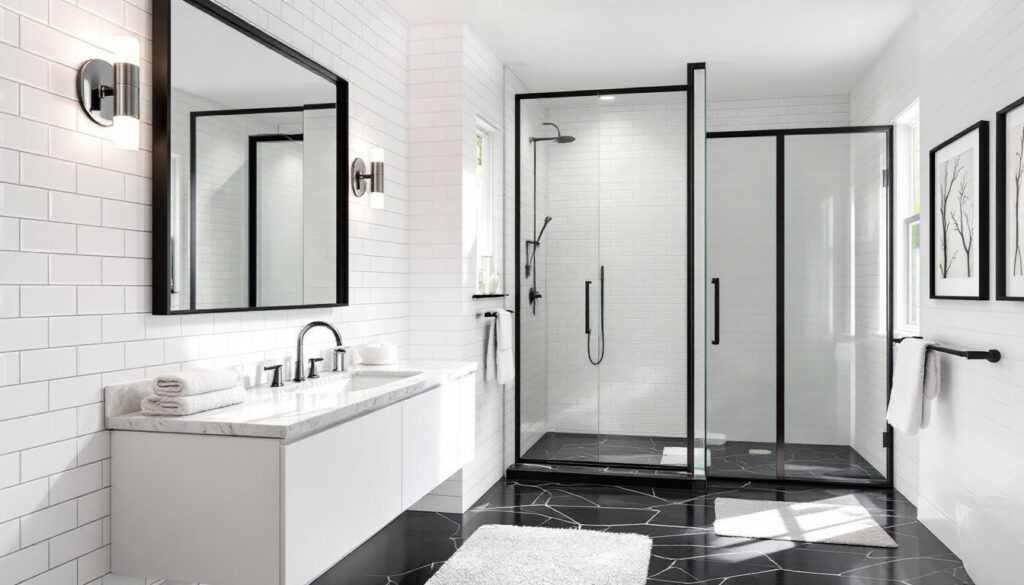
Black and white bathrooms have stayed fashionable for good reason: they’re versatile, visually striking, and work in everything from tiny powder rooms to sprawling master baths. Whether you’re drawn to classy black and white bathroom decor, modern geometric layouts, or luxury finishes, this color scheme adapts to your space and style without requiring a major overhaul. The beauty of black and white bathroom design is its flexibility, you control the balance. Go bold with checkerboard tiles and dark walls, or keep things light and airy with white subway tiles and black accents. No matter your approach, a well-executed black and white bathroom reads polished and intentional.
Table of Contents
ToggleKey Takeaways
- A black and white bathroom design adapts to any space size and style, offering versatility from powder rooms to master baths with bold or minimal approaches.
- The contrast in black and white schemes enhances small bathrooms by defining spatial boundaries and creating a more intentional appearance through visual separation.
- Tile selection drives the entire black and white bathroom aesthetic—from classic checkerboard floors to modern geometric patterns and minimalist subway tiles that suit different layouts.
- Maintain a 60% light and 40% dark balance to avoid a cave-like or sterile appearance, adjusting based on your room’s natural light direction and ceiling height.
- Proper waterproofing with cement board or waterproof membranes is essential in black and white bathrooms to prevent mold and structural damage in high-moisture environments.
- Layer fixtures, lighting, and accents strategically—using matte or chrome finishes, wall sconces, and brass or wood accents—to add depth and prevent a flat, one-dimensional look.
Why Black and White Is the Perfect Bathroom Color Scheme
Black and white transcends trends because contrast is inherently pleasing to the eye, it defines spaces, highlights architectural features, and makes even a small black and white bathroom feel deliberate rather than cramped. The color pairing doesn’t fight with lighting conditions either: unlike pastels that shift in natural or artificial light, black and white hold their visual weight regardless of time of day.
From a practical standpoint, this scheme hides water spots and soap scum far better than pastel or gray walls. You’ll notice stains less on black fixtures and white tiles, which matters in a room that gets constant moisture and use. The scheme also pairs seamlessly with nearly any accent color, warm metals like brass and copper, cool chrome, or even wood tones, so you’re not locked into a single aesthetic direction.
Small black and white bathrooms benefit most from this contrast because the clear visual separation makes spatial boundaries feel defined. A 5-by-8-foot bathroom with white walls and black tile details reads larger and more intentional than the same space painted a single neutral. Modern black and white bathroom designs capitalize on this by using contrasting patterns and finishes to draw the eye vertically, which adds perceived height.
Tile Patterns and Layouts That Make an Impact
Tile selection is where your black and white bathroom design truly takes shape. The right pattern anchors the entire room’s personality, so don’t rush this choice.
Checkered and Geometric Options
Checkboard floors are the classic statement piece, typically 12-by-12-inch or 18-by-18-inch tiles in alternating colors. This pattern works best on floors: using it on walls can feel visually busy in smaller spaces. If you’re installing a checkerboard floor, lay out the pattern dry first (without adhesive) to confirm how the pattern lands around fixtures and doorways. Misaligned tiles that get cut unevenly at edges look amateurish.
Geometric patterns, hexagons, triangles, or linear arrangements, are gaining ground in modern black and white bathroom design. A mix of black and white hexagonal tiles on a feature wall above the vanity creates visual interest without overwhelming the space. These patterns demand precise layout and often require a wet saw to achieve clean cuts. Budget extra time for measurement and planning: rushing the layout phase is where most DIYers stumble.
Subway Tiles and Minimalist Approaches
Subway tiles (3-by-6-inch rectangles) in white with black grout lines is the workhorse of modern black and white bathroom ideas. It’s clean, scalable to any room size, and forgiving if your grout lines aren’t perfectly straight (the linear pattern actually hides minor inconsistencies). Running subway tiles in a staggered “brick” pattern adds subtle movement without fuss.
For a luxury black and white bathroom effect without the geometric complexity, pair white subway tiles on walls with a black or dark marble floor. Alternatively, reverse it: black tiles on walls with white floors. This approach feels high-end because it relies on material quality and proportion rather than intricate patterns. The trade-off is that labor and materials cost more upfront, but the result reads timeless. Plan for proper waterproofing behind all tiles using cement board or a waterproof membrane, bathrooms need this structural backup, and skipping it leads to mold and structural failure down the road.
Balancing Light and Dark Elements Throughout Your Space
The success of any black and white bathroom scheme hinges on balance. Too much dark and your bathroom feels cave-like: too much white and it looks sterile. The standard rule is roughly 60% light and 40% dark, but your layout should guide this ratio.
In a white and black bathroom with limited natural light, keep walls white or light gray and use black for the floor, accent wall, or grout lines. This pushes the visual weight downward and keeps upper surfaces bright. Conversely, in a space flooded with natural light, a dark accent wall or black floor reads sophisticated rather than shadowy. If your bathroom has a window, leverage that light, a north-facing bathroom can handle more black and still feel open: a south-facing room with strong afternoon sun can support dark tones that would feel oppressive elsewhere.
Vertical elements matter too. Tall or full-height dark tiles draw the eye upward, making a bathroom with an 8-foot ceiling feel taller. If your ceilings are lower (under 8 feet), keep the ceiling white and use black at eye level, on the vanity, framing the mirror, or as a stripe of accent tiles. This prevents the space from feeling compressed. Don’t underestimate textural variation either: matte black tiles feel heavier than glossy black, and textured white tiles add warmth that smooth white doesn’t. Mixing finishes within your black and white bathroom design adds depth and prevents a flat, one-dimensional look.
Fixtures, Accents, and Finishing Touches
Fixtures and hardware anchor the black and white bathroom’s overall aesthetic. Chrome or polished nickel fixtures feel contemporary and pair cleanly with any tile pattern. Matte black fixtures, faucets, towel bars, and showerheads, are having a strong moment and work beautifully in modern or minimalist spaces, but they show water spots more readily than polished finishes, so plan for regular cleaning.
Lighting should never be an afterthought in a room with strong contrast. A black and white bathroom needs robust ambient lighting (recessed or a ceiling fixture), task lighting above the vanity mirror, and ideally a dimmer so you can adjust intensity. Poor lighting makes grout lines look dirtier than they are and casts harsh shadows across the tiles. Install wall sconces on either side of the mirror rather than a single center fixture, this eliminates unflattering shadows on your face and is the hallmark of classy black and white bathroom decor.
Accents bring personality. A brass towel rack against white subway tiles reads warm and upscale: wood shelving above the toilet adds organic texture to a geometric tile scheme. A single piece of art or a color-coordinated runner rug in soft gray bridges black and white without introducing a third color. In a luxury black and white bathroom, marble or quartz countertops and fixtures elevate the whole look without requiring pattern changes. Design inspiration from Houzz’s bathroom decorating guides shows how professionals balance these elements.
Storage and organization matter more in small spaces. Open shelving with rolled white towels against black tile looks intentional: clutter reads chaotic. Incorporate closed storage (a vanity cabinet or wall-mounted medicine cabinet) to keep toiletries hidden. In a small black and white bathroom, every visible object competes for attention, so choose carefully. A clear glass shower enclosure keeps sightlines open in a compact footprint, whereas a frosted or textured glass creates privacy without blocking visual space. HGTV’s renovation shows frequently feature bathrooms that balance aesthetics with functional storage solutions, which is worth studying if you’re planning a renovation. Remodelista’s curated design guides also provide real-world examples of how high-end bathrooms integrate fixtures and finishes.
Conclusion
A black and white bathroom isn’t just a style choice, it’s a practical, adaptable foundation that elevates your space regardless of size or budget. Whether you’re updating a powder room with new hardware or undertaking a full tile renovation, the contrast and clarity of this palette make thoughtful design decisions visible. Start with your tile pattern, balance light and dark areas to suit your room’s layout and natural light, then layer in fixtures and accents that reflect your personal aesthetic. Done well, a black and white bathroom becomes a room you genuinely enjoy using, not just passing through.