French country design brings the refined simplicity of rural France into modern homes. This decorating approach blends rustic charm with understated elegance, think weathered finishes, muted earth tones, and curated artwork displayed with purpose. Unlike maximalist styles that demand attention, French country wall decor whispers rather than shouts. Whether you’re drawn to Provençal farmhouses or the softer palettes of French countryside cottages, wall decor sets the entire mood. This guide walks you through the core aesthetics, essential elements, and practical DIY projects that bring authentic French country style to your walls without requiring a major renovation or design degree.
Table of Contents
ToggleKey Takeaways
- French country wall decor emphasizes restraint and intentionality, using fewer, carefully selected pieces rather than wall-to-wall coverage to create a curated, gallery-like appearance.
- Muted, earthy color palettes—creams, soft ochres, weathered blues, and warm grays—paired with flat or matte finishes form the authentic foundation for French country wall decor.
- Original paintings, botanical prints, and ornate-framed mirrors are core elements; arrange 5–7 pieces in salon-style groupings with artwork centered at eye level (approximately 60 inches from the floor).
- Textiles such as vintage linen, lace panels, and woven tapestries add warmth and texture while softening hard surfaces and introducing movement to walls.
- DIY French country wall projects—including pressed botanical prints, distressed wooden frames, and fabric wall hangings—deliver authentic character without requiring professional skills or significant expense.
- Sourcing treasures from local antique shops and flea markets over matching sets creates enduring, timeless beauty that improves with age and personal curation.
Understanding French Country Design Aesthetics
French country style draws from centuries of rural living in regions like Provence, Brittany, and the Loire Valley. It’s not about perfection, it’s about comfortable, lived-in beauty. The hallmark is restraint: fewer, more intentional pieces rather than wall-to-wall coverage. Colors are muted and earthy: creams, soft ochres, weathered blues, faded greens, and warm grays dominate palettes. Textures matter enormously. You’ll see distressed paint finishes, natural linen, lace, wrought iron, and aged wood throughout the style.
Walls themselves are often left relatively simple, sometimes with subtle texture from plaster or limewash finishes. The focus shifts to what’s placed on those walls: carefully selected paintings, mirrors with ornate frames, botanical prints, and fabric accents. This approach makes the wall decor itself the design statement rather than the wall becoming a backdrop for busy patterns. Think of it as European gallery culture applied to a family home. Everything visible has a reason to be there, and nothing feels forced or trendy.
Key Wall Decor Elements That Define The Style
Using Paintings, Prints, And Artwork
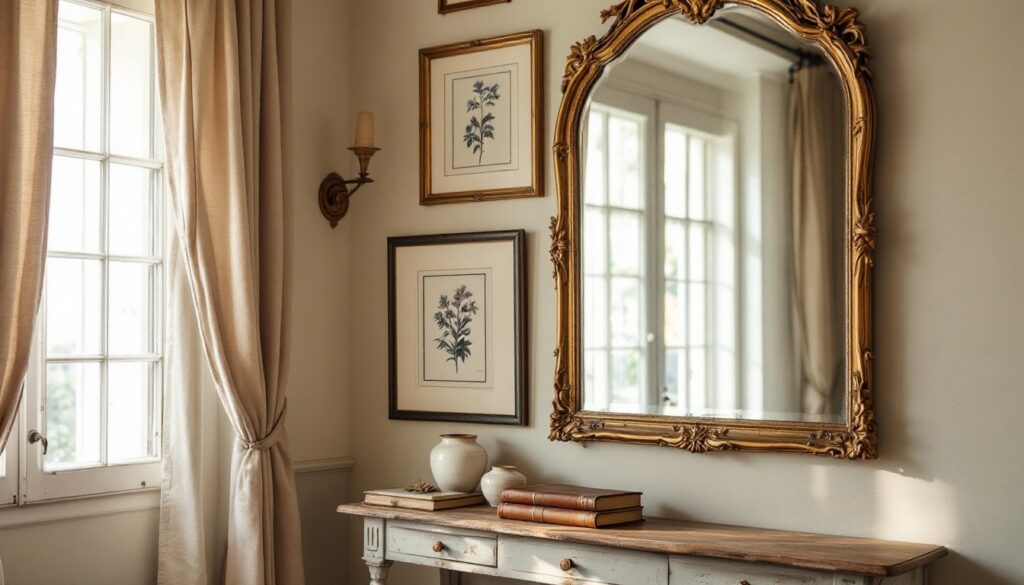
Original paintings, botanical prints, and classical engravings form the backbone of French country walls. Oil paintings in warm tones, landscapes, still lifes, portraits, create focal points without overwhelming the space. You don’t need museum-quality originals: French flea market finds and high-quality reproductions work equally well. Black-and-white botanical engravings, particularly of herbs, flowers, or botanical specimens, align perfectly with the Provençal garden aesthetic. Arrange these in clusters or salons-style groupings using a mix of frame styles: gilded wood, dark lacquered frames, and simple natural wood frames all coexist in authentic French country design.
The key is intentionality. Group five to seven pieces of varying sizes around a central anchor piece, leaving breathing room between frames. Use kraft paper templates taped to the wall to plan your layout before hanging. Hang artwork at eye level, approximately 60 inches from floor to the center of the piece, so viewers don’t have to crane their necks. Smaller prints can nest lower, and larger paintings anchor the grouping higher. Frame construction matters: actual wood or metal frames convey authenticity, while thin plastic framings read as budget-conscious rather than charming.
Textiles And Wall Hangings For Added Warmth
Antique or vintage linen, lace panels, and woven tapestries soften walls while adding texture. Lightweight linen curtain panels framing a window or hung as wall drapes introduce flowing fabric lines. Vintage quilts, particularly in neutral or faded tones, hung on decorative rods add dimensional interest. Woven wall hangings, like those made from natural fibers or macramé in cream tones, introduce craft-like authenticity without feeling bohemian or contemporary.
Mirrors with ornate frames, gilded, aged patina, or wood finishes, multiply light and create the illusion of depth. French country favors mirrors as both functional and decorative pieces. Position a large ornate mirror opposite a window to amplify natural light across the room. Smaller mirrors grouped with artwork create additional visual interest and break up flat wall expanses. Textiles draped over a rod or gently gathered add movement and softness that hard surfaces alone can’t achieve.
DIY French Country Wall Decor Projects
Hanging a salon-style wall gallery requires planning and patience, not skill. Measure and mark all nail positions using a level and pencil before driving any fasteners. Use painter’s tape to outline the arrangement on the wall: snap a chalk line to keep edges straight if hanging a linear grouping. Install picture hangers rated for your frame and artwork weight, standard drywall anchors work for lightweight prints under 10 pounds, but heavier paintings need studs or toggle bolts. Nail at a slight downward angle (about 45 degrees) to prevent frame slippage.
Creating a linen or fabric wall hanging is straightforward if you avoid overcomplication. Source lightweight vintage linen or canvas: stretch it over simple wooden stretcher bars (available at art supply stores) and secure with a staple gun from the back. Alternatively, sew a small rod pocket into the top of linen fabric and hang from a decorative wooden dowel or wrought iron rod mounted with simple brackets. This method respects the fabric’s drape and avoids damage from staples or adhesive.
Making your own botanical prints doesn’t require artistic skill. Press garden herbs, ferns, or flowers between cardstock pages weighted with heavy books for two to three weeks until fully dry. Once dry, arrange them on heavyweight watercolor paper or cardstock in a simple composition. Frame under glass in basic wooden or metal frames. The preserved plant material creates genuine vintage character at a fraction of gallery art costs. This works particularly well grouped in a 3×3 or 2×4 grid arrangement.
Painting distressed finishes on simple wooden frames transforms new frames into aged, French-market finds. Sand new wood lightly, then apply two coats of paint in your chosen color, soft sage, cream, or dusty blue work beautifully. While the second coat is still slightly tacky, sand the edges and high points with medium-grit sandpaper to expose the wood grain underneath. Seal with a matte finish polyurethane to protect the distressed surface. This technique takes an afternoon and costs under twenty dollars per frame.
Color Palettes And Paint Finishes For Authentic Appeal
Authentic French country walls rarely feature bold accent walls or dramatic color blocking. Instead, walls form a neutral canvas for wall decor using soft, muted tones. Cream and off-white dominate, often with subtle undertones of yellow, gray, or blue rather than pure white’s clinical brightness. Soft sage green, dusty ochre, warm taupe, and muted terracotta create regional variation, Provence leans warmer with ochres and creams, while northern regions favor cooler grays and soft blues. Paint manufacturers including Benjamin Moore, Farrow & Ball, and Sherwin-Williams offer specific French country palettes: look for names like “Shaker White,” “Mouse Tail,” or “Old White” that suggest historical authenticity.
Finish matters as much as color. Glossy finishes feel wrong in French country spaces, they’re too modern and reflective. Flat or matte finishes absorb light naturally and create that soft, lived-in quality. Many decorators opt for chalky or lime-based finishes that provide subtle texture and soften harsh shadows. If using standard latex paint, apply thin coats and avoid over-smoothing: slight textural variation reads as authentic rather than intentional or fussy. Prime all walls before painting, particularly if covering darker colors, using a quality primer, this ensures true color representation and better coverage. Plan for three to four hours of work for an average-sized room, including prep, two paint coats, and touch-up.
Consider finishing painted walls with a subtle glaze or wash to add depth and age. A thinned-down earth-tone glaze brushed over dried base paint and wiped with a soft cloth creates mottled, aged character. This technique requires practice on a scrap board first, but the effect perfectly mimics old French plaster walls that have weathered decades of light and shadow. Recent research on interior design trends consistently shows that muted, historically-inspired palettes outperform bold contemporary colors in timeless appeal.
Conclusion
French country wall decor succeeds through restraint, intentionality, and authentic materials rather than expensive purchases or trendy pieces. Start with a neutral wall color that feels like a natural canvas, then layer in artwork, mirrors, and textiles that tell a story, preferably sourced from local antique shops, flea markets, or family collections. The style rewards patience in hunting for perfect frames and prints. Your walls become a gallery of discovered treasures rather than a showroom of matching sets. This approach creates enduring beauty that grows more comfortable with age, just like genuine French country style itself.